Educational information only — this is not medical advice. Always take a certified first aid/CPR class and talk to your pediatrician.
Starting Solids: About High Chairs
🍼 High Chair Safety Tips for Parents 🪑
Mealtime should be safe AND set your baby up for feeding success. A high chair is the safest place for your little one to eat — here’s what to look for and how to use it. 👇
Aim for the “90-90-90” feeding position
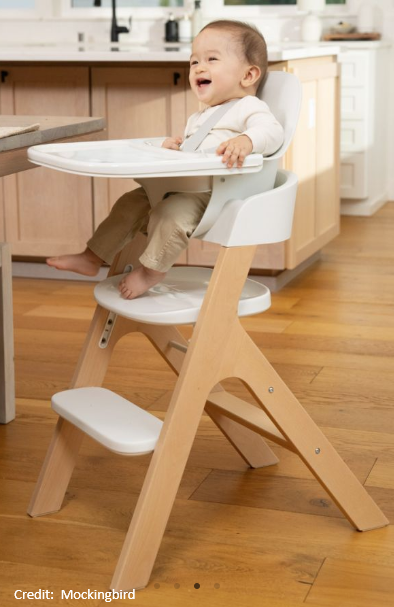
The optimal, safest feeding position has the hips, knees, and ankles all aligned at 90 degrees. Knees bent at 90° give your baby core stability — think of how hard it is to balance on a tall stool with no footrest. A stable base lets your baby focus on the big job of learning to chew and swallow.
Look for these features when you shop:
- 🦶 Adjustable footplate — feet should rest on a firm surface. Not reaching yet? Place a sturdy book under the feet, and remove it once they grow into the footrest.
- ⬆️ Fully upright seat — skip the recline for eating. Upright keeps the airway safe and lowers the risk of choking (and even ear and respiratory issues linked to feeding lying back).
- 🔒 5-point harness — a 3-point harness is the minimum, but a 5-point is safer and keeps a wiggly, newly mobile baby from standing up or sliding out. Make sure the buckle is secure every single time.
- 🛡️ Crotch post — this little post keeps your baby from slipping or sliding down under the tray.
- ⚖️ A stable, wide base — tip-overs do happen, so sturdiness matters.
Use it the right way — every time:
- ✅ Always buckle the harness, even for a quick snack. Most high chair injuries are falls — and they usually happen when a child who isn’t buckled stands or climbs. The harness is your #1 protection.
- ❌ The tray is NOT a safety restraint. It won’t stop a fall — only the harness will.
- 👀 Never leave your baby alone in the high chair. Head injuries are the most common serious injury, so stay within arm’s reach.
- 🧼 Keep buckles clean and snug — a loose or improperly fastened strap can be a strangulation hazard.
- 🏷️ Choose a chair that meets current safety standards (ASTM-certified).
Safety Tips
👶 Safe seating = happy, healthy mealtimes. 💛
Starting Solids: Two Good Paths
Starting solids is more complicated than most people think — but here’s some good news to kick off this series: there is no single “right” way. The two main styles both work. Neither is wrong. 👇
🥄 TRADITIONAL (SPOON-FEEDING)
You offer smooth purées and mashed foods on a spoon, gradually moving to thicker textures, then soft lumps, then finger foods over the following months.
• Easier to see how much baby actually eats
• Familiar and reassuring for many families
• Still teaches new flavors and textures — just in stages
🥦 BABY-LED WEANING (BLW)
Baby feeds themselves soft, graspable pieces of family food from the start — usually no purée stage. Baby controls the pace and the amount.
• Encourages self-regulation and autonomy
• Builds hand/mouth coordination early
• Often means baby eats what the family eats
✅ WHAT THE RESEARCH SHOWS
When done safely, the two approaches come out remarkably similar:
• Choking: BLW does NOT increase choking risk compared with spoon-feeding (as long as safety rules are followed). Gagging — which is normal and protective — can happen with both.
• Iron & growth: No meaningful difference in iron levels or growth between the two methods.
• Either way: offering iron-rich foods early is important
ONE GOAL
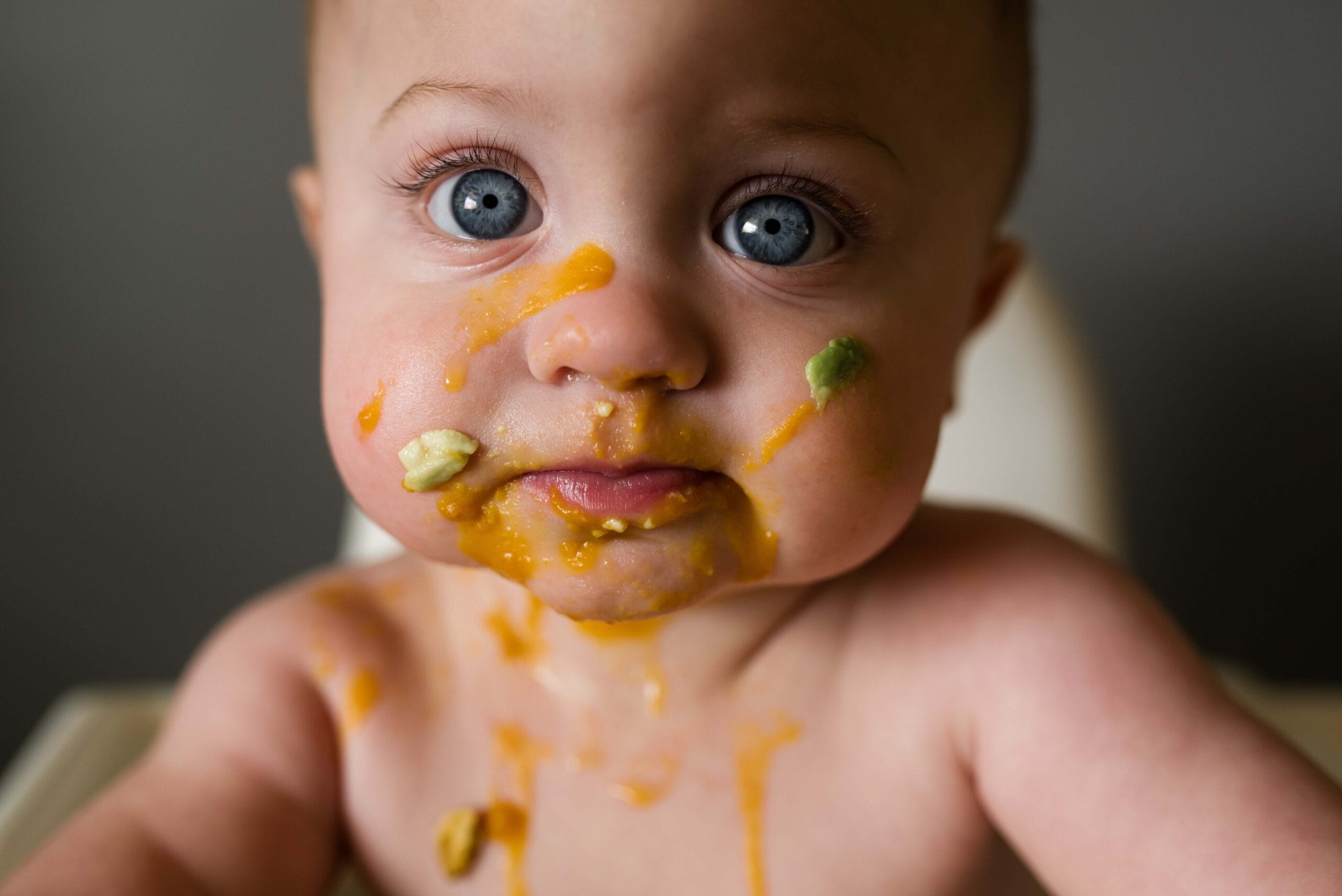
👶 NO MATTER WHICH YOU CHOOSE
• Wait for signs of readiness (~6 months, good head control, sitting with support, interest in food)
• Always supervise, baby upright and seated
• Avoid choking hazards: whole nuts, whole grapes, hard/raw chunks, popcorn, chunks of nut butter
• Learn the difference between gagging (normal) and choking (silent, needs help)
• Avoid honey and cows milk until at least 12 months
• Many families mix both styles — and that’s perfectly fine too!
This is just the starting point. . 💛
Starting Solids: Make it fun
Food is so much more than nutrition. It’s comfort, tradition, family time, and connection — something that is a central experience for our entire life. So when it’s time to introduce solids to your baby, the goal is simple: make it a POSITIVE and SAFE experience. 💛
Here’s a game-changer that guides how we think about feeding — the Division of Responsibility, from registered dietitian Ellyn Satter (author of Child of Mine: Feeding with Love and Good Sense):
👉 Parents decide the WHAT, WHEN, and WHERE.
👉 Baby decides HOW MUCH and WHETHER to eat.
In these early days, solids are about EXPLORING new tastes and textures — not about hitting nutrition goals. If your baby is having fun at the meal, you’ve already won. 🎉
A few tips to set the stage:
✨ Purees are a great start — whether you choose traditional feeding or baby-led weaning.
✨ Homemade purees from your own family meal work just as well as store-bought. Totally your choice!
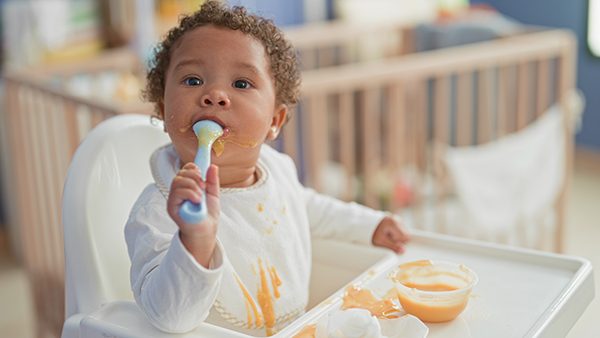
✨ Never force a spoon into baby’s mouth. If spoon-feeding, wait for baby to lean in and open up. Or better yet – let them use their hands or grab the spoon themselves! 🙌
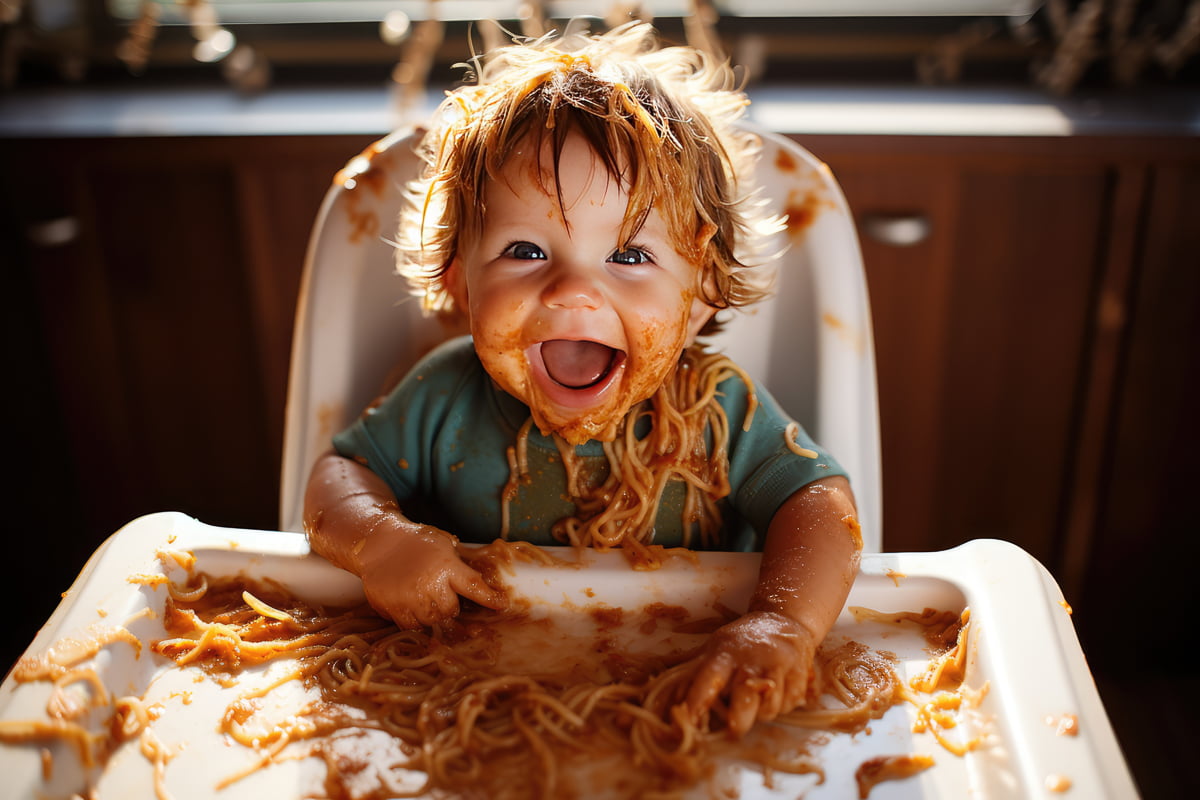
✨ Let them get messy! Grabbing the spoon or using their hands is all part of learning.
✨ No pressure, no bribing, no cajoling.
Think about it like going out for a nice meal — you want a relaxed, happy environment, not someone pressuring you to clean your plate. Give your baby that same gift. 🍽️❤️
Not Stressful
Starting Solids: Gagging vs. Choking
🍜👶Starting solids is exciting — and a little nerve-wracking. One of the biggest worries we hear from parents is: “Is my baby gagging… or choking?” Let’s break it down. 👇
First things first: take a class 🎓
The single best thing you can do is take an adult AND pediatric first aid + CPR class — look for one that’s American Heart Association certified. Search for an “adult and pediatric first aid course” near you (plenty of options in the Long Beach area!). Hands-on training beats any online video for learning the maneuvers that actually work.
Why babies gag so much (and why that’s normal) 😌
The gag reflex is controlled by important nerves in the brain and is totally normal. In a 6-month-old, the reflex is extra sensitive — it’s triggered toward the front of the tongue. As babies grow and learn to chew and swallow, that trigger point moves further back.
Translation: babies gag A LOT more than adults — and that’s a good thing. It’s the body’s built-in safety system protecting the airway. Your baby may even gag just from putting their own hands in their mouth! Learning to eat is a skill, just like crawling or walking. 💪
How to tell the difference 🚦
GAGGING (usually okay — keep calm & watch):
- Baby is still breathing
- Coughing, sputtering, or making sounds
- May look red-faced briefly
- The body is doing its job clearing food
CHOKING (emergency — act + call for help):
- Can’t cry or make any sound 🔇
- Can’t cough or struggles to
- Color changes (turning blue/dusky)
- May clutch or grab at the throat/neck
Per the American Heart Association: a baby with a mild airway blockage should be allowed to clear it by coughing while you watch closely for signs it’s becoming severe. 👀
What TO do ✅
- Stay calm. Your stress can startle and upset your baby, making things worse.
- Watch and let the cough work when baby is gagging.
- Trust the body to do what it’s designed to do.
- Know your trained maneuvers (that’s why the class matters!).
What NOT to do ❌
- Never stick your finger in baby’s mouth to “fish it out” — blind finger sweeps usually push food further back.
- Don’t panic or hover with visible fear.
What Parents Should Know

Smart food choices 🥑
Set your baby up for success by avoiding common choking hazards:
- Small, round, hard foods 🍬
- Whole nuts, popcorn, hard raw veggies (like raw carrot), whole grapes, chunks of hot dog
- Foods cut into coin shapes
Make foods soft enough to mash with gentle pressure, cut them into safe sizes, keep baby sitting upright, and always supervise mealtime. 🪑
Bottom line 💛
Gagging is noisy but normal. Choking is silent and serious. Learn the difference, take a certified class, offer safe foods — and breathe. You’ve got this.
Educational information only — this is not medical advice. Always take a certified first aid/CPR class and talk to your pediatrician.
🍜👶
Starting Solids: What Foods?
🥑🍠Beginning solid foods is one of the most exciting milestones — and one of the most misunderstood! Here’s what to keep in mind as your little one starts their food journey. 👇
🍽️ Keep it simple at the start
- Offer solid foods about 1–2 times per day.
- Introduce 1 new food each day, alongside foods you’ve already tried.
- Don’t stress about portions or how much they eat — you truly can’t control that (and that’s okay!).
👶 Remember the golden rule (thank you, Ellyn Satter!):
➡️ You decide WHAT food is offered, WHEN, and WHERE.
➡️ Baby decides HOW MUCH they eat — and WHETHER they eat at all.
Some days they’ll devour everything. Other days, barely a bite. Both are completely normal! 💛
Baby is still getting all the nutrition they need from breastmilk or formula right now. These early meals are about learning, exploring, and building skills.
🍴 Let baby lead
Put food on a plate and let them choose and self-feed. Resist the urge to offer one food at a time — that’s trying to control the meal. Instead: stay close, supervise, encourage, and model eating yourself!
🥣 Pick your method — there’s no wrong one!
Baby-Led Weaning, purees, or a mix of both all work:
- Puree one food from the family dinner into a safe, soft texture.
- You can choose store bought purees – but there is no magic there! Creating your own at home is perfectly fine.
- Try a veggie one day, a fruit the next, a meat the next — building variety over time.
- Doing BLW? Offer safely sized finger foods.
- Choosing cereals? Pick iron-fortified rice, barley, or oatmeal. Mix with breastmilk or formula — and never put cereal in a bottle. Spoon-feeding (or self-feeding) helps them build crucial eating skills
All About the Experience!
🚫 Safety first
- No whole milk and no honey until 12 months of age.
- Yogurt is okay! ✅
- Always supervise during meals.
🥬 Beat picky eating before it starts
Expose baby to ALL foods, especially vegetables! Try sprinkling a dish with a green herb so they get comfortable with the color and variety. 🌿
💚 Bottom line: Make this a positive, pressure-free, no-expectations experience. No forcing. No clean-plate rules. Just exploration and fun!
Starting Solids: Oh No! Something New
🥄 Is your older baby turning away the new purée or finger food you just introduced? Spitting it out, making a face, clamping their mouth shut? Take a breath — that wariness is normal, healthy, and expected. 🧠
Food neophobia (aka being highly skeptical of new things) — let’s just call it food skepticism — is a built-in survival instinct, not a problem to fix. Long ago, being cautious about unfamiliar foods helped little ones avoid swallowing something harmful. Your 6-to-12-month-old isn’t being “difficult.” Their brain is doing exactly what it was designed to do. 👶💪
Here’s the part most parents are never told:
👉 It can take 10 to 15 exposures — sometimes more — before a baby accepts a brand-new food.
That means a single rejection tells you almost nothing. One “no” is NOT a final no. 🙅➡️😋 Most babies who refuse a food on day one will accept it after a week or two of calm, repeated offerings. This is especially true for bitter veggies like broccoli, peas, and spinach — the ones that need the most patience.
Why older infancy is the sweet spot ⏰
The 6–12 month window is when your baby is learning two big things at once: new TASTES and new TEXTURES. That double learning curve is a lot! It’s also why variety early on matters — babies exposed to a wide range of flavors and textures during this stage tend to be more adventurous eaters down the road.
💡 What actually works:
✅ Offer the same food again and again — aim for a dozen-plus tries before deciding
✅ Let baby watch YOU eat and enjoy the same food (modeling is powerful 👀)
✅ Serve tiny tastes, stay relaxed, and follow baby’s hunger and fullness cues
✅ Rotate flavors, textures, and combos — try a refused veggie mixed a new way
✅ Expect mess — touching, squishing, and playing with food is part of learning
I Don't Know About This

🚫 What to skip:
❌ Forcing, bribing, or pressuring baby to finish the bowl
❌ Giving up after one or two rejections
❌ Writing your baby off as a “picky eater” this early
Think of it as a long game, not a one-shot audition. Every single taste — even the ones that get spit out — is teaching your baby’s palate something. Patience is the real secret ingredient. 🥄❤️
