
A Tradition. A Milestone. Your Moment.
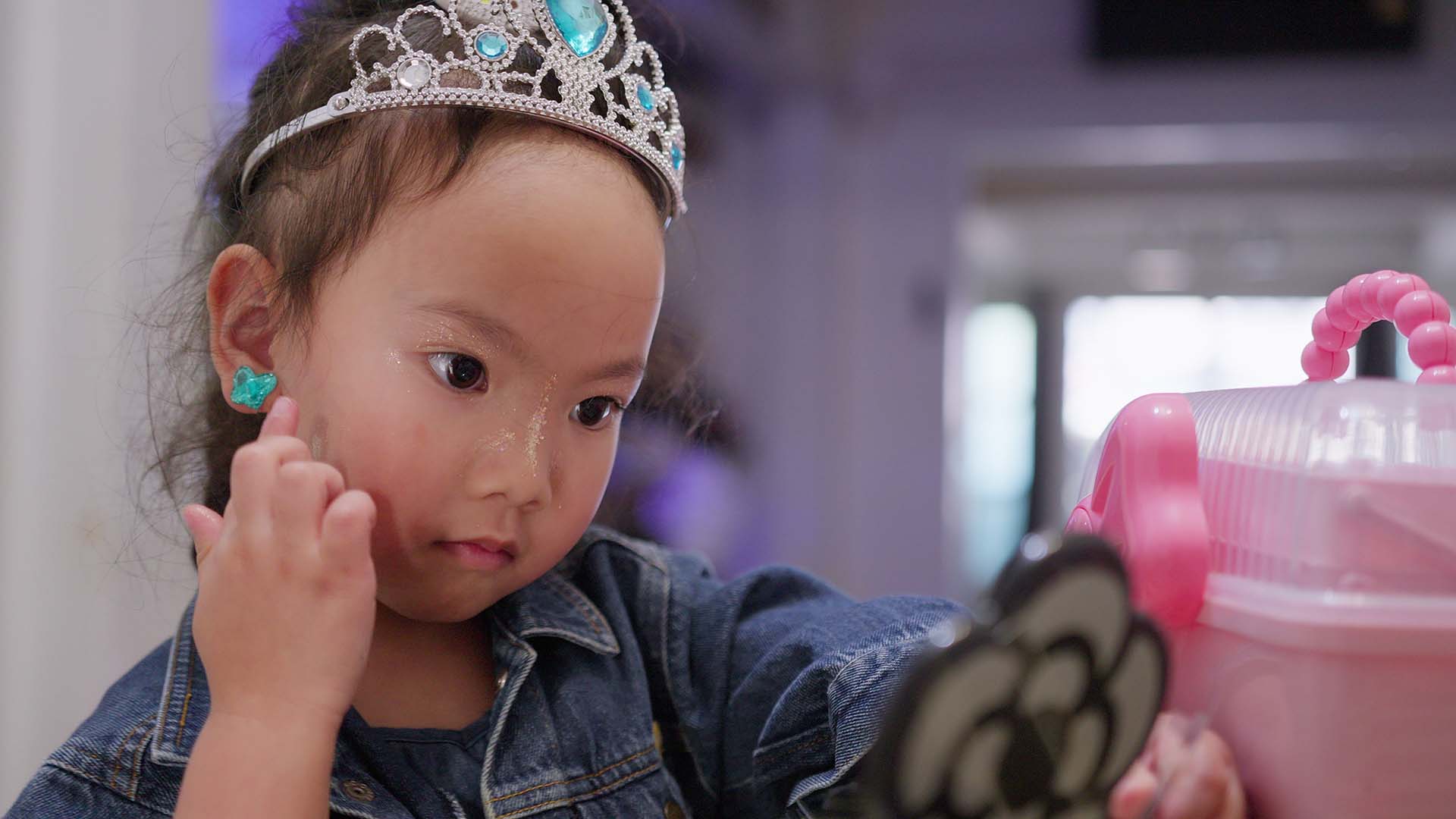
Congratulations on this milestone of getting your ears—or your child’s ears—pierced! At ZenithMedicine, we hope to make this a safe, professional, and caring experience for you and your family.
Ear piercing is often something that is shared across generations. For many families, particularly when piercing a baby girl’s ears, it is a cherished family tradition passed down from parents and grandparents.
Throughout history, ear piercing and wearing earrings have held cultural significance in communities around the world. From ancient India, Egypt, and the Middle East to cultures throughout Asia, Africa, and Indigenous communities across North and South America, earrings have represented traditions, beauty, identity, status, and family heritage.
Today, families choose to pierce their children’s ears for many different reasons. Whatever your reason, we are honored to be part of this special moment and are committed to making the experience as comfortable, positive, and safe as possible.
Ear Piercing — Your Style, Your Way
No matter your age or gender, your style is uniquely yours. If you’re ready to make your style statement, we’re here to help.
At our clinic, you’ll find a welcoming, relaxed, boutique-style atmosphere with a beautiful harbor view—while enjoying the peace of mind that comes with being in a medical clinic. From first piercings for little ones to a second or third piercing for teens and adults, we tailor the experience to each individual.
Every ear-piercing appointment takes place in a private room with plenty of space for several family members to be comfortably present. We believe getting your ears pierced should be a relaxed and personal experience, with the people you choose nearby for support and to share the moment.
Your ear piercing experience is performed with the same attention to cleanliness, sterilization, and sanitary technique that you would expect from a medical practice.
We offer Blomdahl patented medical plastic ear-piercing studs, as well as a beautiful selection of implant-grade titanium studs in a variety of styles, so you can choose the look that’s right for you.

Your Options. Your Choice. Your Experience.
ZenithMedicine offers two methods of ear piercing: medical-grade instrument piercing, featuring the well-respected Blomdahl Medical Ear Piercing System, and hollow needle piercing, the technique commonly used by professional piercing studios.
Both methods can be performed safely when appropriate sterile technique, high-quality jewelry, and proper aftercare are used. The primary difference is how the initial piercing channel is created. The information below is intended to help parents and clients understand the differences between the two techniques so they can make an informed choice.
Hollow Needle Piercing.
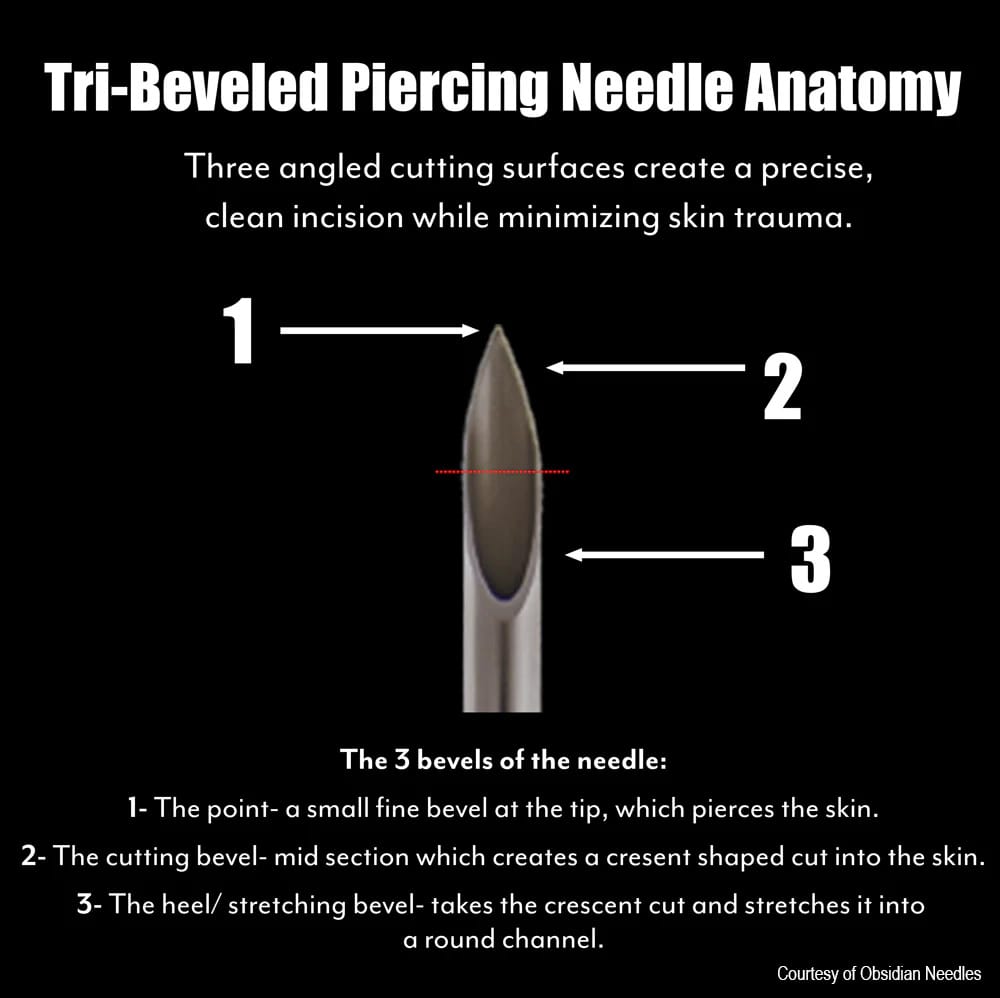
A hollow piercing needle has a beveled, sharp tip designed to pass through the skin and soft tissue in a controlled motion. As the needle passes through the tissue, it creates a precise piercing channel. The jewelry is then inserted through this channel.
Because the needle creates the opening rather than pushing the jewelry directly through the tissue, this technique is designed to minimize unnecessary tissue compression and trauma. Many professional piercers consider hollow needle piercing to be the preferred technique for body piercing, and many clients appreciate the controlled and predictable nature of the procedure.
For hollow needle piercing, ZenithMedicine uses implant-grade titanium jewelry from a leading manufacturer of professional body-piercing jewelry, available in a variety of styles.
Blohmdahl Medical Grade Sterile Instrument Piercing System.
Instrument piercing is an alternative method of ear piercing that is particularly popular for children and families. Some parents prefer this approach because the procedure is quick and straightforward.
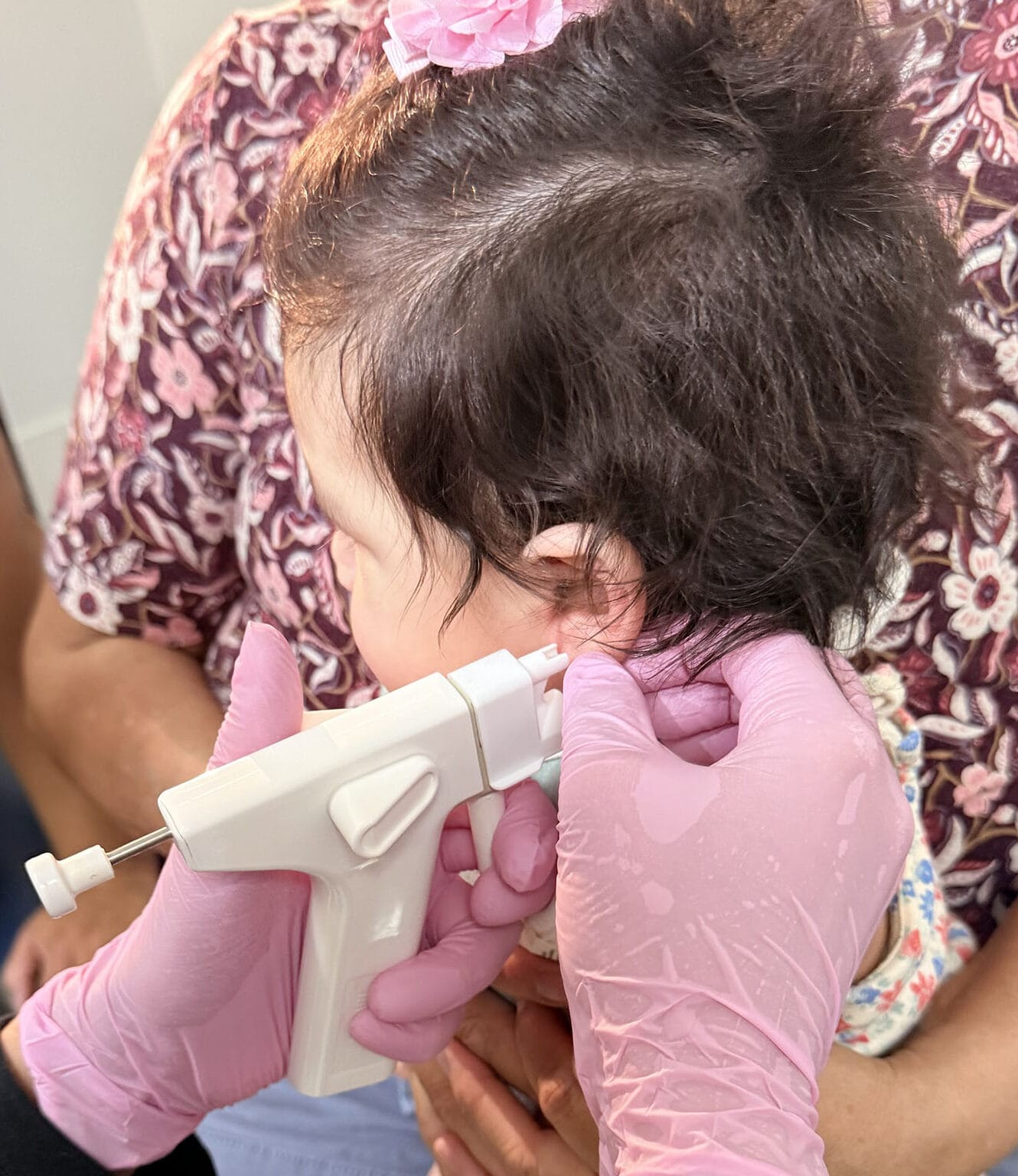
The Blomdahl system uses a sterile, single-use disposable cartridge for each client. The spring-loaded instrument uses the selected earring stud to create the piercing opening and simultaneously place the earring.
Because the stud itself passes through the tissue, the mechanism differs from hollow needle piercing. The two techniques create the piercing channel in different ways, and individual experiences with discomfort and healing can vary. Some clients may prefer the speed and simplicity of instrument piercing, while others may prefer the controlled tissue penetration with less trauma of a hollow needle.
Another advantage of the Blomdahl system is that, when appropriate, both ears may be pierced simultaneously, which can be especially helpful for children who may be anxious about having the procedure repeated.
Blomdahl offers specially designed medical-grade plastic and titanium ear-piercing studs intended for use with its piercing system. These earrings are designed with a focus on biocompatibility and minimizing exposure to nickel, making them a popular choice for initial ear piercing.
Piercing Policies and FAQ's
APPOINTMENT TIMING & LATE POLICY
- Piercings are by appointment only.
- Please arrive at least 10 minutes early for your appointment time.
- Late appointments more than 10 minutes may result in rescheduling.
DEPOSIT & CANCELLATION POLICY
- We collect a $50 deposit at time of booking.
- Deposit becomes non-refundable for no show appointments.
- If you need to cancel or reschedule, we require 24 hours notice.
INFANT & YOUNG CHILD POLICY: PREPARING FOR THE APPT
- Minors less than 18yo must arrive with a guardian.
- ID requirements: Birth Certificate of child, driver’s license ID card of Guardian.
- We recommend that infants receive their first set of routine vaccinations before ear piercing. While vaccinations are not required, we strongly encourage parents to follow the recommended immunization schedule.
- We strongly recommend that at least two adults be present for a pediatric ear piercing. For the safety and accuracy of the piercing, a parent or guardian must be prepared to securely hold and support the child during the procedure. The other adult can offer distraction support or entertainment. Our staff will guide you through the process, but the parent or guardian is responsible for providing the necessary support and restraint.
Before your appointment, we encourage parents and guardians to discuss and decide who will be most comfortable and able to hold the child securely during the piercing. Having this plan in place helps the appointment go as smoothly as possible.
Even when we take every effort to make a child feel comfortable and at ease, young children may become upset, cry, or resist during the procedure. This is completely normal. We ask that parents come prepared for this possibility and understand that a brief period of crying or distress does not necessarily mean that something is wrong.
Our goal is to make the experience as calm, safe, and positive as possible for both the child and family.
SAFETY & RISKS
- Bleeding. Minor bleeding is a possible part of ear piercing. Because the earlobe contains relatively small blood vessels, bleeding is typically minimal and stops quickly with gentle pressure. Significant or prolonged bleeding is uncommon.
- Vitamin K & Breastfeeding. We love our breastfeeding dyad’s! We wholeheartedly support breastfeeding and recognize its many well-established benefits. Breast milk naturally contains relatively low amounts of vitamin K, which plays an important role in normal blood clotting. Infants also have naturally lower vitamin K levels than adults, particularly during the first several months of life, even when they received the recommended vitamin K injection at birth.For this reason, young infants—especially those who are exclusively breastfed—may have somewhat less vitamin K available for blood clotting than older children and adults. While clinically significant bleeding from ear piercing is uncommon, we recommend discussing elective ear piercing with your child’s healthcare provider if your infant is very young or has any condition that could affect normal blood clotting.
- Illness. If your child is experiencing a fever, significant cold symptoms, rash, active infection, or is otherwise unwell, we ask that you reschedule your appointment. Piercing is an elective procedure, and allowing your child to recover first helps provide the safest and most comfortable experience. We reserve the right to reschedule an appointment if a child appears to be ill at the time of the visit.
- Keloids. Keloid formation is an uncommon but important potential complication of ear piercing. Keloids are more likely to develop in individuals with a personal or family history of keloids and are particularly associated with ear piercing during or after adolescence. If your child or a close family member has developed keloids following an injury, surgery, or piercing, please understand that this is a risk.
- Embedded Earrings. An earring can become embedded in the earlobe at any age, but this complication is seen more commonly in young children and most often involves the earring back. Children may be particularly susceptible because they may inadvertently push or pull on the earring or have difficulty communicating discomfort. Initial piercing jewelry is intentionally designed with a longer post than jewelry worn after the piercing has healed. This extra length allows room for the normal swelling that can occur during the early healing period. It is important not to tighten the earring back against the earlobe, as adequate space is needed to accommodate swelling and allow proper healing.
- Vaccinations. We recommend that infants receive their first set of routine vaccinations before ear piercing. While vaccinations are not required, we strongly encourage parents to follow the recommended immunization schedule.
- Sterility & Infection Prevention. Your ear-piercing experience is performed with the same attention to cleanliness, sterilization, and infection-prevention practices that you would expect from a medical practice. We use sterile, single-use components where appropriate and carefully follow infection-control procedures throughout the piercing process. We also use high-quality, biocompatible jewelry selected specifically for initial ear piercing. For safety and infection-control reasons, we cannot pierce ears using earrings brought from home. All jewelry used for the initial piercing must meet our safety and material requirements.
AFTERCARE
- We have put together a brief presentation about aftercare for your piercing.
- Video will open in a new window
- It is also posted on our YouTube Channel

- ZenithMedicine-PiercingAfterCare
DO I HAVE TO BOOK ONLINE?
Yes, please. Piercing your child requires documentation of your consent. Also we ask for specific documents (your Drivers License and Birth Certificate). Guardian’s drivers license required for booking. You may choose to upload a copy of the minor’s Birth Certificate, or bring with you to the appointment. Please note the Birth Certificate is a required document that must be provided.
PRICING
You will choose the method of ear piercing you would prefer as part of the Booking process.
| Method | Price |
| Instrument Piercing. ONE Earlobe. | $60.00 |
| Instrument Piercing. TWO Earlobes. | $99.00 |
| Hollow Needle Piercing. ONE Earlobe. | $75.00 |
| Hollow Needle Piercing. TWO Earlobes. | $125.00 |
**There is an additional fee for extra time required for Children less than 6yo: $25.00
| Options | Price |
| Enhanced Comfort Option: 6 months or older. Topical anesthetic is applied to help reduce discomfort associated with ear piercing. An assessment will be performed, including a discussion of the risks and benefits of topical anesthetic use. The numbing cream is applied in our office approximately one hour before the piercing procedure. This service is an optional, self-pay service and may not be billed to or reimbursed by the client’s health insurance. | $85.00 |
| $ 17.50 |
IS THERE A MINIMUM AGE?
At least 2 months of age.
We recommend your child have their first set of vaccines which is typically at 2 months of age.
Please read the Infant & Young Child Policies for information.