Educational information only — this is not medical advice. Talk to your pediatrician.
About Fevers
IMPORTANT: Babies younger than 1 month. If your baby is under 1 month old and has a temperature of 100.4°F (38.0°C) or higher, call our office or go to the emergency department right away, day or night.
What Is a Fever?
- A fever is a body temperature of 100.4°F (38.0°C) or higher.
- Fever is a symptom, not an illness. It is usually caused by an infection, most often a virus.
- Fever is one of the body’s normal ways of fighting infection.
- Fever itself typically does not harm healthy children. What matters most is the illness causing the fever and how your child looks and acts.
Fever Myths and Facts
Many parents worry a lot when their child has a fever. This is sometimes called “fever phobia.” Here are the facts behind some common myths.
- Myth: Fever causes brain damage.
Fact: Fevers from infections do not cause brain damage. The brain controls body temperature, and fevers from illness rarely go above 105°F (40.6°C). Dangerous body temperatures (about 108°F or 42°C) happen from outside heat, such as a child left in a hot car. They do not happen from fever. - Myth: All fevers need to be treated with medicine.
Fact: Fever medicine is only needed if your child is uncomfortable. When a child is uncomfortable, they typically will refuse hydration. This is the most important RISK. The child must drink and have a normal amount of wet diapers. The goal is to help your child feel better, and importantly hydrated. - Myth: If the fever doesn’t come down with medicine, the cause is serious.
- Fact: Fever medicine usually lowers the temperature by only 2 to 3°F (1 to 1.5°C). It often does not bring the temperature back to normal, and the fever usually comes back when the medicine wears off. This is normal and does not mean the illness is serious.
- Myth: Without treatment, fevers will keep going higher.
Fact: The brain keeps fevers from infection from climbing to dangerous levels. - Myth: Treating the fever makes the infection go away faster.
Fact: Fever medicine helps your child feel more comfortable, but it does not cure the infection or make it shorter. - Myth: Fever medicine prevents seizures caused by fever.
Fact: Fever medicine does not prevent febrile seizures (see below).
How to Check for a Fever
- A child who feels warm may not have a fever. Children can feel warm after playing hard, crying, being bundled up, or being in hot weather. Recheck after 15 to 20 minutes of rest.
- If your child seems sick or feels warm, check their temperature with a digital thermometer. You do not need to keep checking it over and over if your child is comfortable.
- Best method by age:
- Under 3 months: An armpit temp is safe and good for screening. If the armpit temp is above 99° F (37.2° C) re-check it. Use preferably a rectal temperature (the most accurate).
- 3 months to 4 years: rectal or forehead temps are accurate. An ear thermometer can be used after 6 months old. Armpit readings are less accurate; but can be used for screening. If an armpit reading is high, you can confirm it rectally.
- 4 years and older: by mouth (oral). Ear and forehead thermometers are fine for older children.
- Do not use glass mercury thermometers.
Caring for Your Child with a Fever
- Fluids: Offer plenty of fluids, such as breast milk, formula, water, or electrolyte drinks. Children with fever lose more fluid than usual.
- Clothing: Dress your child in light clothing. Do not bundle them up.
- Rest: Let your child rest. It is fine for them to play if they feel like it.
- Avoid: Do not use rubbing alcohol. These can cause shivering and discomfort, and alcohol can be absorbed through the skin and cause poisoning.
Fever Medicines
Give medicine if the fever is making your child uncomfortable, fussy, or unable to sleep, eat, or drink. There is no specific temperature number at which medicine must be given.
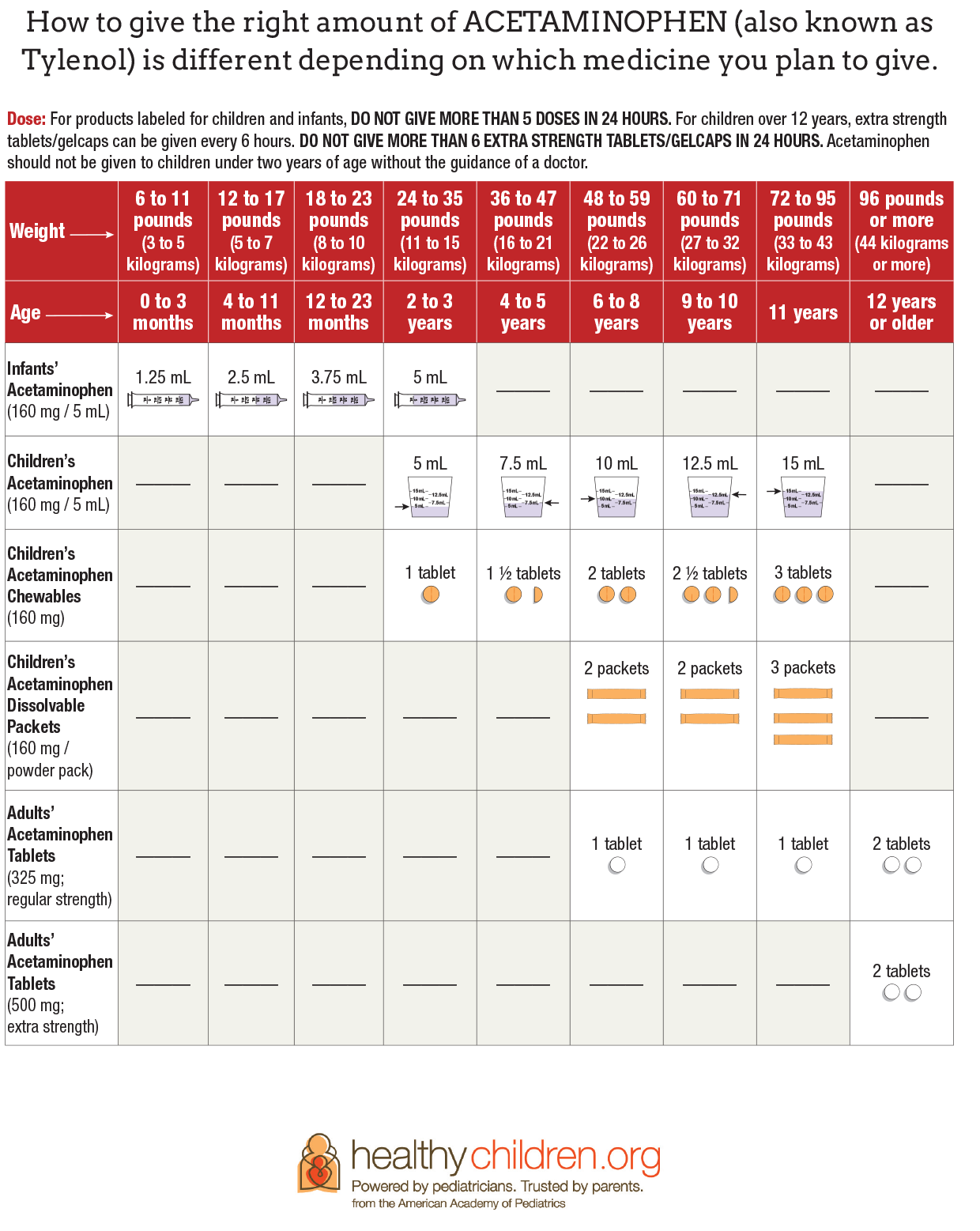
- Acetaminophen (Tylenol and store brands):
- Can be used in babies 2 months and older.
- For babies under 1 month, give it only if a doctor tells you to.
- If a baby under 1 month has a fever – go to the emergency room.
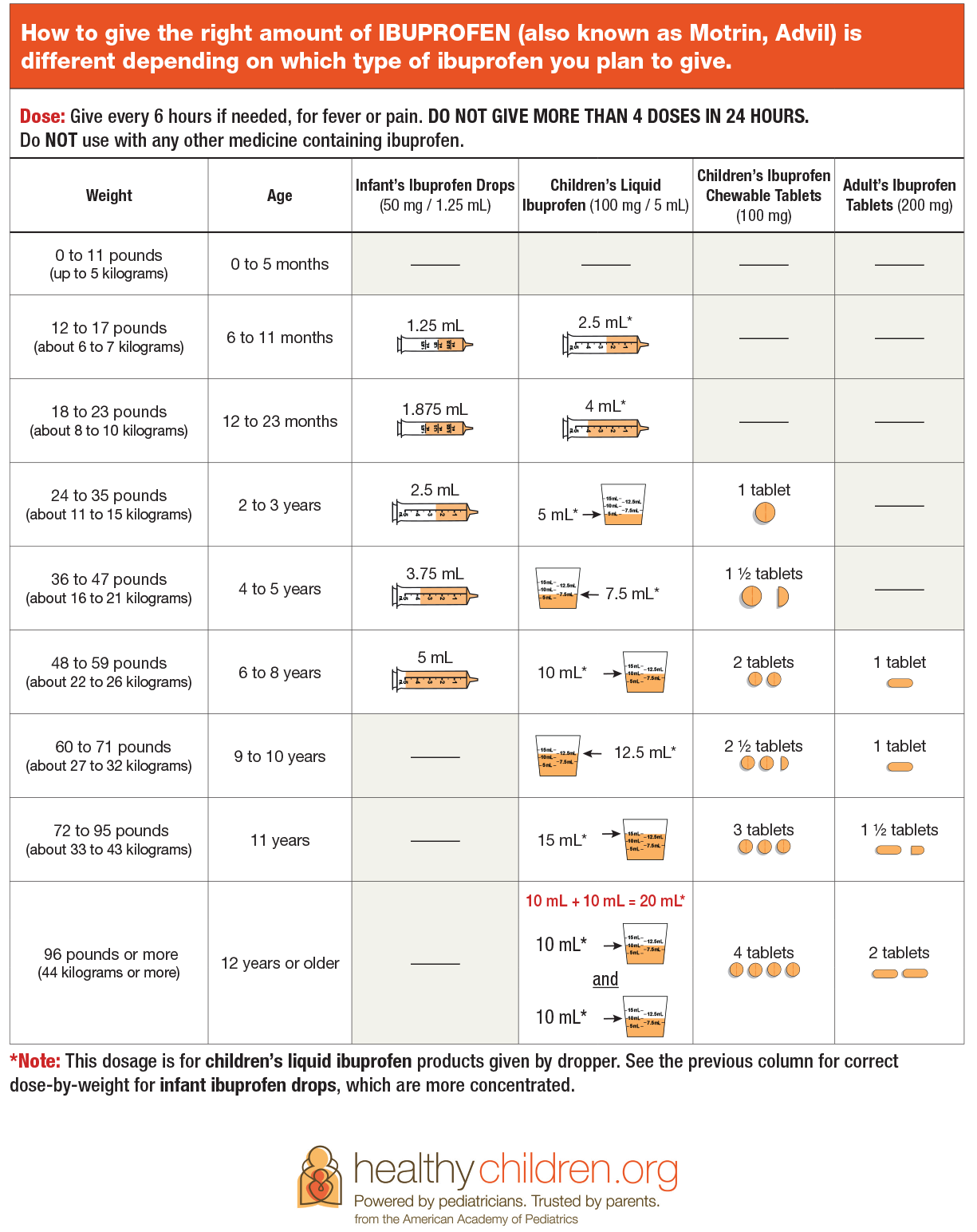
- Ibuprofen (Motrin, Advil and store brands):
- Use only in babies 6 months and older.
- Avoid it if your child is vomiting a lot, not drinking well, or has chickenpox.
- Never give aspirin to children or teenagers. It can cause Reye syndrome, a rare but serious illness that harms the liver and brain.
Dosing safety tips:
- Dose by your child’s weight, not age. Dosing chart below on this page.
- Always use the measuring device that comes with the medicine. Do not use kitchen spoons.
- Liquids come in different strengths. Check the strength on the label every time.
- Watch for hidden doses. Many cough and cold medicines also contain acetaminophen or ibuprofen. Do not double up. Avoid cough and cold medicines unless specifically directed by your Doctor.
- Store medicines up high and out of children’s reach.
How Long Do Fevers Last?
- Most fevers from viral illnesses last 2 to 3 days, and sometimes up to 4 or 5 days.
- It is normal for the fever to come back when fever medicine wears off.
Remember: Look at your child, not just the thermometer. A child who is drinking, playing, and acting more normal after fever medicine is usually not seriously ill. A child who looks very sick needs to be checked, no matter what the temperature is.
This information is for general education and does not replace the advice of your child’s doctor. If your child’s doctor has given you different instructions, follow those instructions.
Acetaminophen (Tylenol) Dosing Table
Ibuprofen (Motrin, Advil) Dosing Table